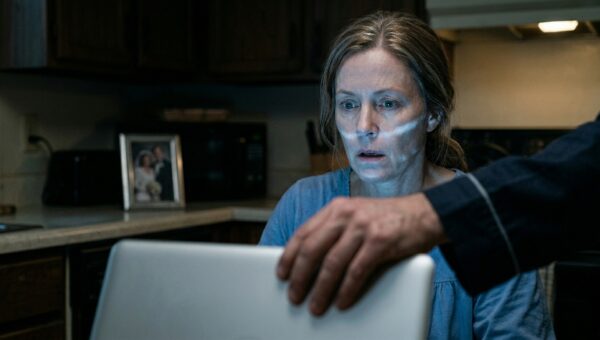
“‘It was an unfortunate labeling error, Mrs. Hayes, but you should really be thrilled that she’s healthy,’ the hospital administrator said, folding his hands on his massive oak desk.”
I didn’t blink. I didn’t raise my voice. I just looked at him.
“Thrilled,” I repeated.
“Exactly,” he smiled. A polite, practiced, utterly empty smile. “These administrative hiccups happen. But the outcome here is incredibly positive.”
He pushed a small, crisp white envelope across the polished wood.
“The hospital would like to refund your copays for the past twelve months as a courtesy. And of course, we wish Mia nothing but the best.”
I looked at the envelope. I thought about the heavy blue binder sitting in the passenger seat of my car. I thought about the vinyl folding cot.
I didn’t touch the envelope. I stood up, adjusted my purse on my shoulder, and walked out of the room.
I need to back up for a second. I need you to understand what those ten years actually cost.
The blue binder started as a thin yellow folder.
Mia was two years old when the original doctor sat me down in a sterile room in Ohio and used words like aggressive, degenerative, and terminal. He told me she wouldn’t survive past age five.
My stomach dropped so fast I thought I was going to throw up on my own shoes.
I didn’t just cry. I panicked. I went into absolute survival mode.
Within three weeks, I sold the small bakery I had spent six years building. I loved that bakery. It smelled like yeast and powdered sugar every morning at 4 AM. I sold the ovens, the display cases, the recipes. I sold my car. I emptied every penny of my retirement.
I packed Mia’s clothes into trash bags and drove twelve hours straight to Boston. That is where the best pediatric specialists in the country were located.
My husband, David, drove up two weeks later.
He stayed for exactly four months.
“I can’t watch her die, Sarah,” he whispered in the hospital parking lot. He was staring at the pavement instead of my face. “I can’t live in this waiting room. I’m sorry.”